Your Loaf Didn't Spring. But You Don't Know Why.
So you can't tell what to change. And you're about to repeat the same mistake again.
This is the feedback loop problem.
Duncan’s Dough Looked Ready. But the Loaf Didn’t Spring.
Duncan followed the Reboot process.
The dough rose during bulk. It looked good during proofing.
But when the loaf came out of the oven, it didn’t spring.
The crumb was dense. There was no ear.
From the outside, everything seemed reasonable.
The starter looked active. The dough rose. The timeline made sense.
But Duncan couldn’t tell what went wrong.
By the time the result was visible, limited spring, dense crumb, flat profile, the decisive part of the process had already happened the day before.
That’s the feedback loop problem.
Without tracking each stage of the bake as it unfolded, there was nothing concrete to point to. Only guesses.
Was it the flour.
The hydration.
The shaping.
Or his skill.
Through the Sourdough Clinic analysis, the diagnosis became clear.
The starter wasn’t at peak strength. It showed activity, but not the endurance needed to carry fermentation from bulk through proofing.
It could start fermentation, but it couldn’t power the chain from start to finish.
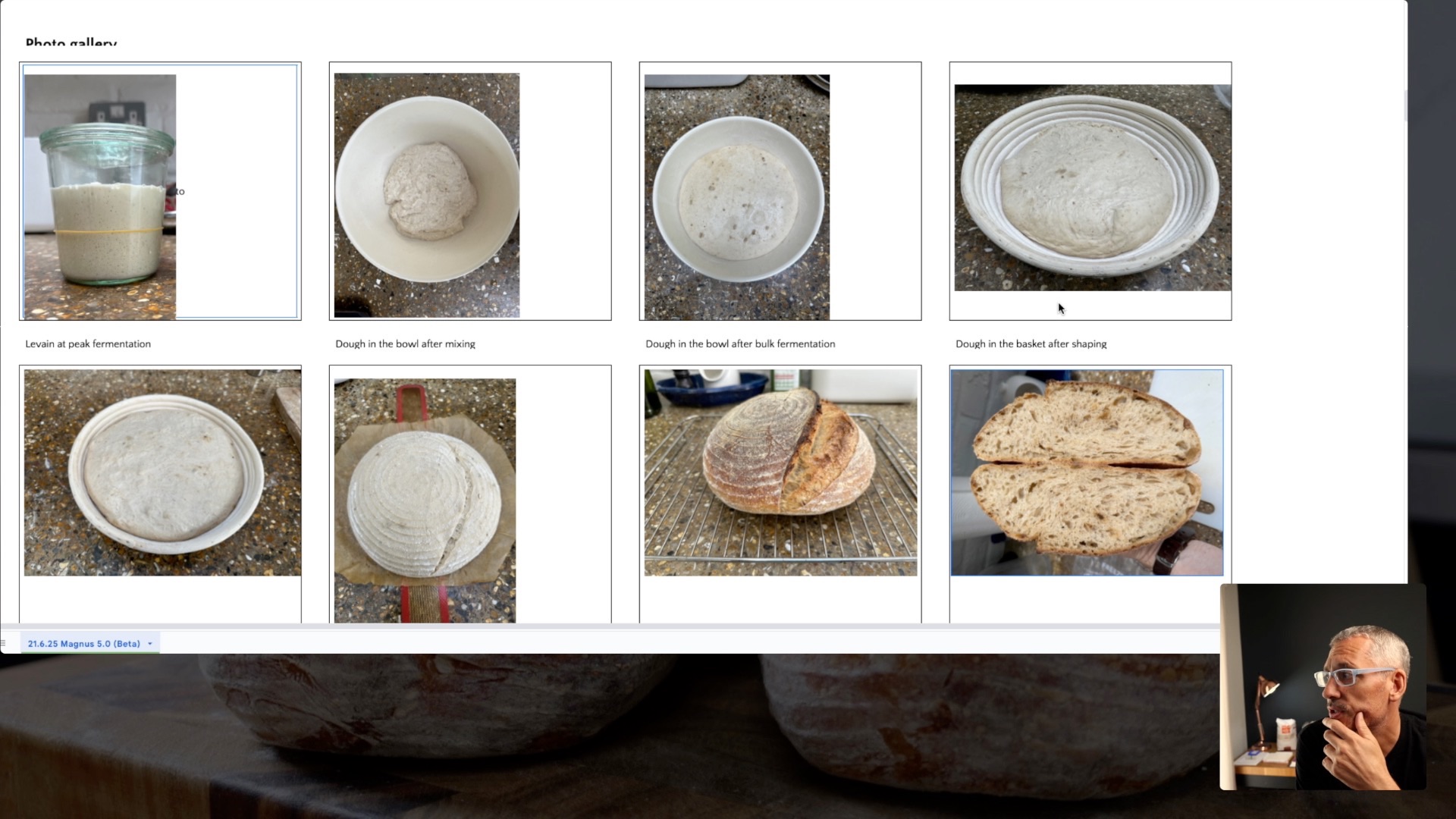
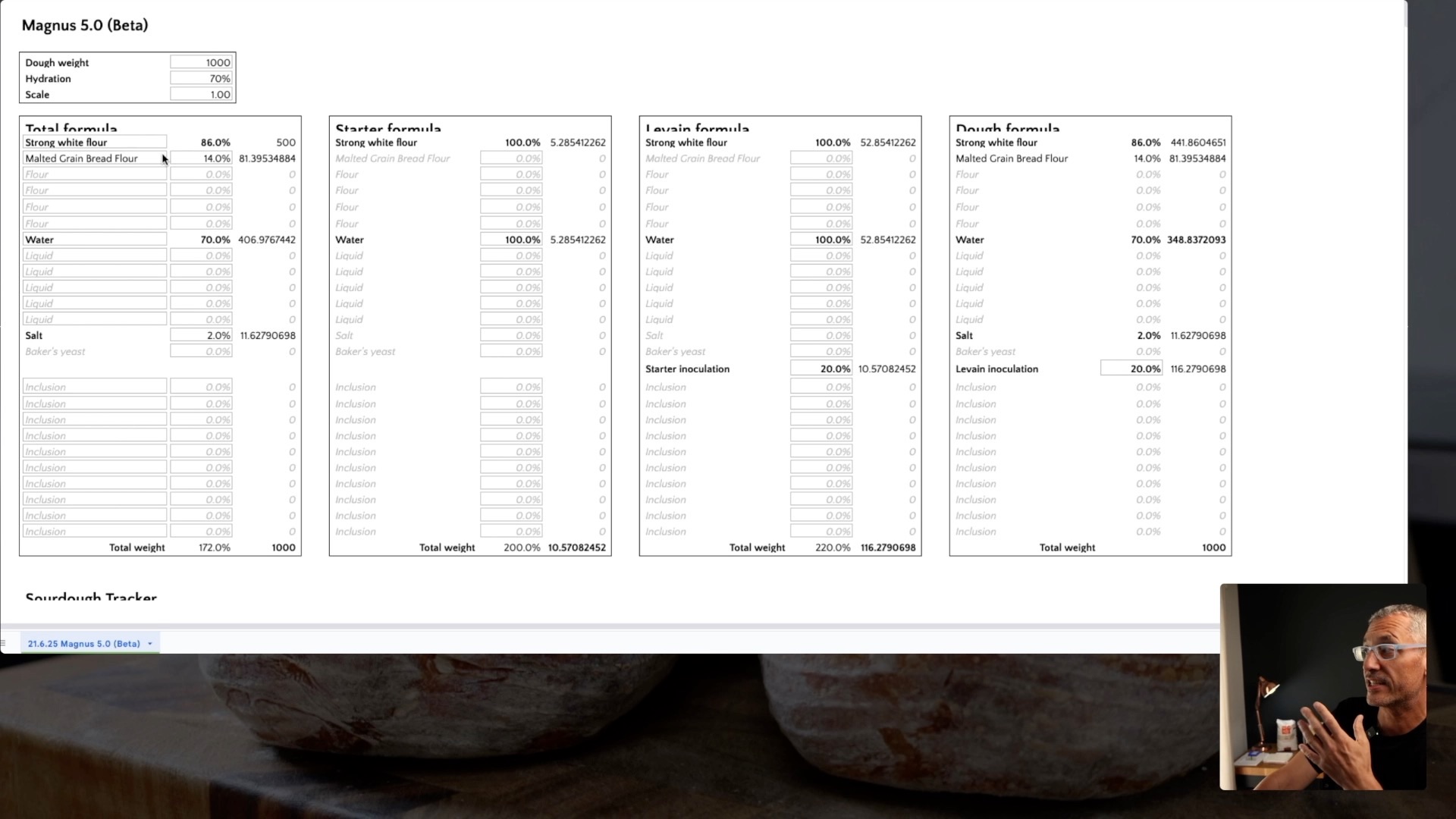
You make decisions throughout the process at every link in the fermentation chain: the starter, bulk fermentation, proofing, and cold retard.
But the result of those decisions only shows up much later, after the loaf has come out of the oven and cooled.
Sometimes that’s more than twenty-four hours after the decisions were made.
By that point, it’s hard to trace cause and effect.
You’re looking at a flat loaf, a dense crumb, weak oven spring. But you don’t yet have a clear way to connect it back to what actually happened during the bake.
So instead of learning from the result, you’re left guessing.
Was it the starter?
The bulk?
The proof?
The cold retard?
You change two or three things for the next bake and hope one of them works.
But if the next loaf improves, you still don’t know which change made the difference.
And if something goes wrong again, you’re left wondering whether it was the change you made or something else entirely.
That’s why progress can feel frustratingly slow.
Not because you aren’t trying hard enough, but because the feedback arrives too late and without the reference frames needed to interpret it.
Why This Keeps Happening
Most home bakers aren’t struggling because they’re careless or inconsistent.
They’re struggling because too many variables are changing at once.
Without a clear reference for what each stage should look like when it’s right, it’s impossible to isolate cause and effect.
Bulk fermentation, proofing, and starter strength all influence the final result, and their effects overlap.
Add delayed feedback to the mix, and diagnosis becomes even harder.
By the time the loaf is baked and cooled, the decisions that mattered most are already a day old.
So instead of recognising patterns, each failed bake feels unique.
Not because it is, but because there’s no stable framework to compare it against.
The Missing Piece: Pattern Recognition
What’s missing isn’t more information.
It’s the ability to recognise patterns across bakes.
When you don’t have reference points, every result looks different.
But once you know what to look for, patterns start to emerge.
A flat loaf.
A dense crumb.
Weak oven spring.
These aren’t unique failures.
They’re symptoms that point to specific stages in the fermentation chain.
Pattern recognition is what allows you to trace a result back through the process.
Not by guessing, but by understanding how decisions at each stage show up in the final loaf.
And once you can see those patterns, each bake becomes usable feedback.
Not just what happened, but why it happened.
The Solution: The Sourdough Clinic
The Sourdough Clinic is where pattern recognition is learned in practice.
Instead of guessing what went wrong with your own bake, you watch real member bakes being analysed from start to finish.
The decisions are laid out. The results are examined. And the connection between the two is made clear.
Each bake is treated as a case study.
The tracker captures timings, temperatures, and the baker’s own observations at each stage.
The photos show the critical decision points and how those decisions expressed themselves in the dough and the final loaf.
You see how I trace outcomes back through the fermentation chain.
Not by instinct or intuition, but by reading the signals the dough and the loaf are already giving.
Over time, the patterns stop feeling abstract.
You begin to recognise the same symptoms appearing again and again.
And you learn what they usually point to.
That’s how diagnosis becomes possible.
And that’s how you stop changing everything at once and start making deliberate adjustments.
The goal of the Clinic isn’t to fix a single bake.
It’s to give you the judgment to troubleshoot your own bakes with confidence.
How Pattern Recognition Closes the Feedback Loop
Before teaching sourdough to home bakers, I spent years working as a professional chef.
In that environment, results matter.
And when something doesn’t work, you don’t guess.
You work backwards to find the cause.
You don’t change everything at once.
You isolate variables.
You look for patterns across repeated outcomes.
That way of thinking followed me through years of professional cooking, private cheffing, and baking in different kitchens and conditions.
When I started teaching sourdough, I didn’t want to recreate the same trial-and-error loop most home bakers get stuck in.
I wanted to bring the same diagnostic mindset into bread baking.
That’s where this approach came from.
Not from tricks or techniques, but from learning how to read results, identify patterns, and make deliberate adjustments based on evidence.
The Sourdough Clinic is built around that same professional habit.
Observe. Document. Analyse. Adjust.
Because that’s how consistent results are earned.
Not by hoping the next bake works, but by understanding why the last one didn’t.
A Good Loaf Is Still Not Finished.
Carmen followed the Reboot process and baked a loaf most people would happily repeat. In the Sourdough Clinic, we went deeper and identified:
• A starter that peaked earlier than expected
• Bulk fermentation that extended past its optimum point
• Gas loss during shaping that quietly limited final volume
None of this was obvious from the finished loaf alone.
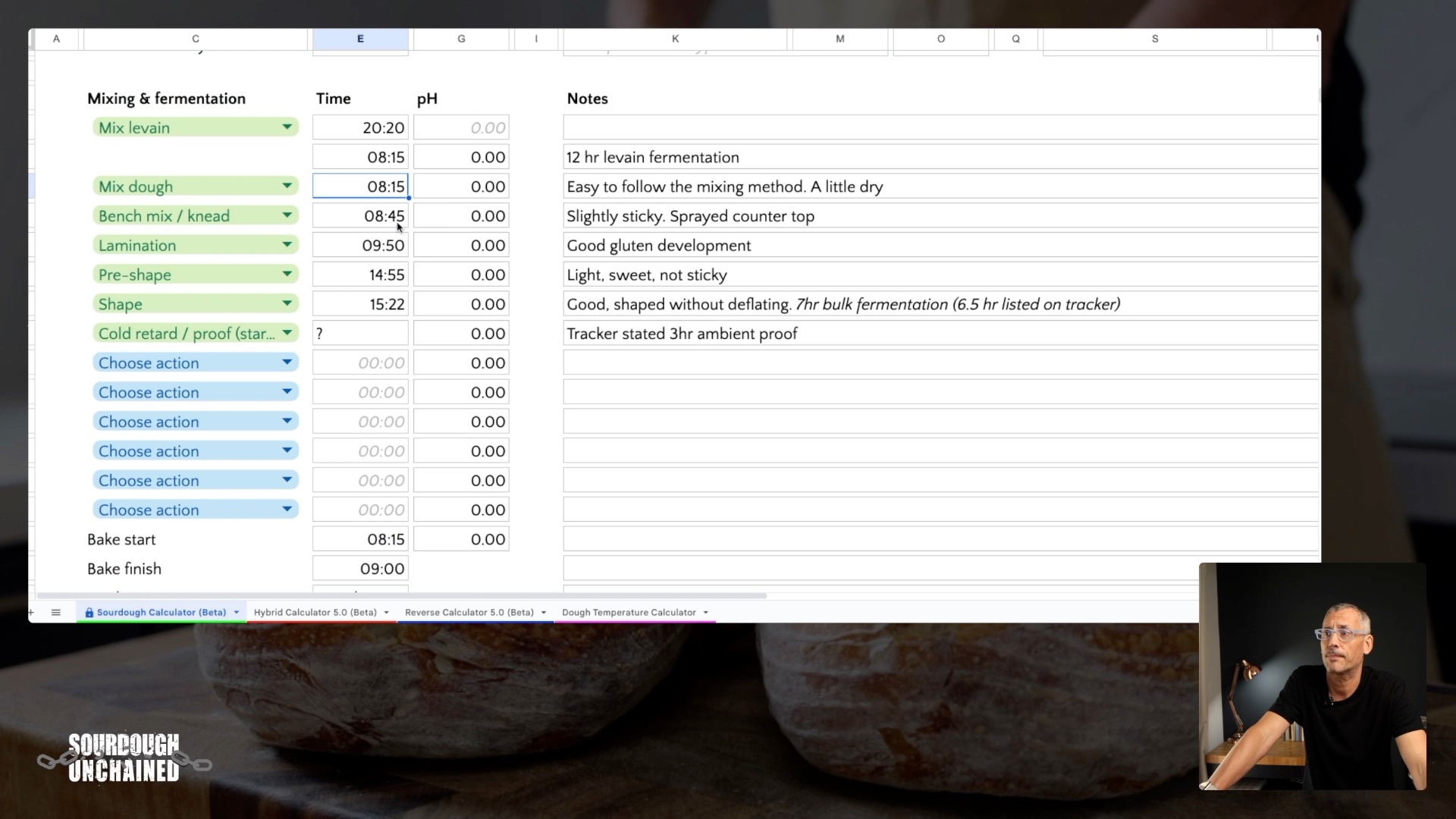
In the Clinic, I show exactly how these conclusions are reached by investigating the Magnus 5 sourdough tracker at key moments and connecting it through the fermentation chain.
This isn’t advice. It’s trained pattern recognition.
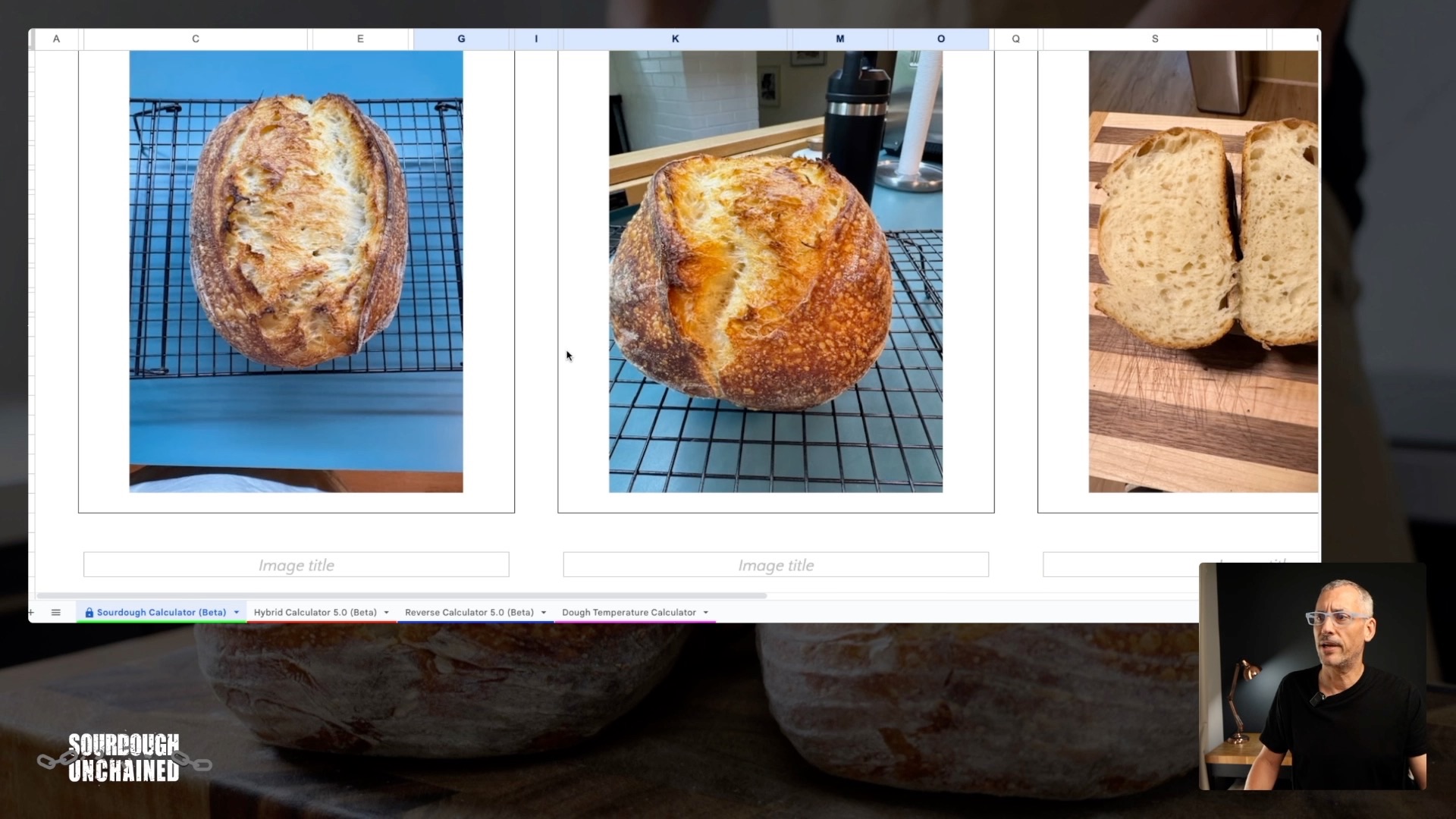
Clinic visuals: Process, data, and result, analysed together.
What Happens When You Join
Once you join, you follow a clear, step-by-step system designed to remove guesswork and build reliable results.
Step 1: The Sourdough Starter System
Rehab or stabilise your starter so fermentation is powered correctly from the start.
Step 2: Dough-to-Basket Calibration
Size your dough properly so final proofing becomes measurable, not a guess.
Step 3: Fermentation Chain Fundamentals
Learn to track each stage of fermentation by volume to remove guesswork completely.
Step 4: The Reboot Process
Run controlled bakes that remove variables and lock in consistency.
Step 5: The Sourdough Clinic
Submit real bakes for analysis and learn how to diagnose and fix issues going forward.
How this works as a membership
You use the five steps to build a solid foundation, then continue refining your baking through intentional recipe design, shaping flavour, texture, nutrition, and appearance with each bake.
Progress happens bake by bake, at a pace that fits your life. There’s no fixed schedule and no concept of falling behind.
The membership gives you continued access to the full system and ongoing support as you apply it in your own baking, including Sourdough Lab livestreams where real bakes are analysed and decisions are explored in practice.
The Sourdough Unchained System gives you the framework. The membership is where you apply it, refine it, and build judgment over time.
Want to see exactly what’s included?
You can explore the full curriculum and lesson breakdown below.
This is where the feedback loop finally closes.
The Sourdough Clinic teaches you how to read your results and adjust with confidence.
.
Sourdough Unchained Annual Membership
$147/y
Most Popular
Best Value
- $12.25 p/m (billed annually)
- The 5-Step Sourdough System
for mastering fermentation - Personalised feedback on your bake
- Magnus 5 professional recipe calculator
- Monthly live workshops and Q&As
- Sourdough Lounge (members’ HQ)
- 7-day money-back guarantee
Sourdough Unchained Six Month Membership
$99/6m
- $16.50 p/m (billed for 6 months)
- The 5-Step Sourdough System
for mastering fermentation - Personalised feedback on your bake
- Magnus 5 professional recipe calculator
- Monthly live workshops and Q&As
- Sourdough Lounge (members’ HQ)
- 7-day money-back guarantee
You’re not paying for more tips or techniques.
You’re paying to learn how to diagnose your own bakes and improve with confidence.
The Complete Sourdough Unchained System – Lesson Breakdown
Execution alone doesn’t create consistency. Diagnosis does.
The first part of Sourdough Unchained teaches you how to execute the fermentation chain correctly. The Sourdough Clinic teaches you how to read the results of that execution.
That’s where patterns become visible. And that’s where real progress begins.
Step 1: The Sourdough Starter System
Step 2: Dough-to-Basket Calibration
Step 3: The Fermentation Chain Fundamentals
Step 4: The Reboot Process
Step 5: The Sourdough Clinic
Applying the System
Developing Judgment: Expert Conversations
Supporting Tools & Resources
7-Day Money-Back Guarantee
Not satisfied? Get a full refund within 7 days. No questions asked.
You'll get immediate access to everything — The Fermentation Chain, all systems, personalised feedback, and the entire member library.
Try it risk-free. If it's not right for you, we'll refund every penny.
The only risk is continuing to guess when your dough is ready.
Frequently Asked Questions
What if I've never baked sourdough before?
How much time do I need each week?
Do I need special equipment?
How does the personalized feedback work?
What if I’ve tried other courses and I’m still struggling?
Is this worth the investment?
Is VAT included in the price?
Can I cancel anytime?
Is this just videos, or is there interaction?
This Is Where Guesswork Stops and Understanding Begins
When consistency improves, it’s rarely because of a single adjustment.
It’s because a bake was properly read.
Inside the Sourdough Clinic, I break down selected bakes in detail, using the tracker, the process, and the finished result, to show how the conclusions are reached and how the fermentation chain actually behaved.
You’re no longer wondering what actually shaped the result.
You can see how each link in the fermentation chain affects the next.
That’s how confidence is built.
Not by adding more techniques, but by learning how to diagnose bakes and apply the same thinking to your own.
7-day money-back guarantee. Cancel anytime.